Innovation in an industry outsiders call slow
Our client is one of Australia’s largest rail and bulk transport providers, hauling freight across the national network every day. It has a long record of pushing innovation in what many outsiders consider a slow industry, and its internal digital solutions team carries much of that ambition.
The team owns a portfolio of internal business applications, from yard asset management to a driver companion app. Digizoo works alongside it, bringing a user-centred, design-thinking approach to the business problems it takes on.
Finding the outcome behind the telemetry
The team’s next product would be built on the large volume of telemetry coming off locomotive sensors. The data was rich and the technology was ready. What the product needed was a clear line from that data to the decisions planners and controllers make every shift, and to the organisation’s wider strategy.
Digizoo took that on first. Working with the operator’s stakeholders and the people who would use the product, we discovered and defined a strategic framework for it, so every feature could be traced to an operational outcome and measured against it.
The same thinking applied across the portfolio. Each new application had been starting from scratch, and planners were working across several tools to answer one question. A shared design language and a shared set of components would let the team ship faster and give users one consistent experience.
Ship the product, embed the practice
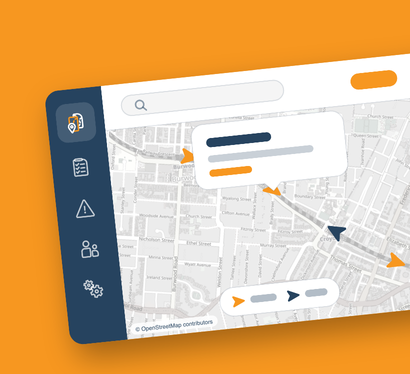
The result is a live operations app: a shared, real-time view of trains, locomotives and crews built on the telemetry, train management and crewing systems the operator already runs. The first users were the planning team who keep services running day to day, and they helped shape every release.
- Interviews and design reviews with planners, fleet managers and engineers set what the dashboards showed, what they alerted on, and what they left out.
- Product analytics dashboards let stakeholders measure whether a feature worked, with cohort analysis of returning users and daily user counts feeding the next decision.
- An embedded product delivery framework lets the team keep delivering and improving without adding overhead.
- Starting from the operator’s brand guidelines and Digizoo’s customisable design system, we set up a design system for the team: a repository of components, templates and guidelines, with the design and developer processes to use it.
“You can actually see that it’s running.”
Controller, on the live variance view
Fleet managers saw the same shift in what the data could do for the operation.
“I think putting that level of data out there will be very powerful.”
Fleet manager, reviewing the locomotive dashboards
Adopted on release, and a faster team behind it
The planning team took the product up on release. Internal NPS was 86, the user base kept growing, and people compared it with what they had before rather than with what they were promised.
“So much easier than the way I used to do it through a few different screens.”
Planner, internal user
Controllers told us they would stop using the legacy tracker, which had become slow to update while the new app stayed fast. That reception opens the door to retiring older business applications organically, as users choose the new one.
The design system paid back too. The team’s designers now get from concept to high-fidelity wireframes in 50% less time while keeping a higher visual standard, which frees them to spend more on research and testing. The operator has a foundation for a consistent brand experience across its business applications, and the product is now the base for other business units looking at what live telemetry can do for them.